WHITE LINES
Longer marks mean a hazard
A broken white line marks the centre of the road. When the line lengthens and the gaps shorten, there is a hazard ahead: do not cross unless the road is clear.
Check a line doodleline

WHAT THE HIGHWAY CODE SAYS
Every line on the road is an instruction.
Road markings are painted in just three colours: white, yellow and red. The Highway Code and the Department for Transport explain what each pattern means, from a gentle warning to a rule you must not break.
WHITE · YELLOW · RED three colours
Check a lineTHE SHORT ANSWER
Lines along the middle of the road are about overtaking.
Lines along the kerb are about stopping and parking.
WHITE LINES
A broken white line marks the centre of the road. When the line lengthens and the gaps shorten, there is a hazard ahead: do not cross unless the road is clear.
Check a lineYELLOW LINES
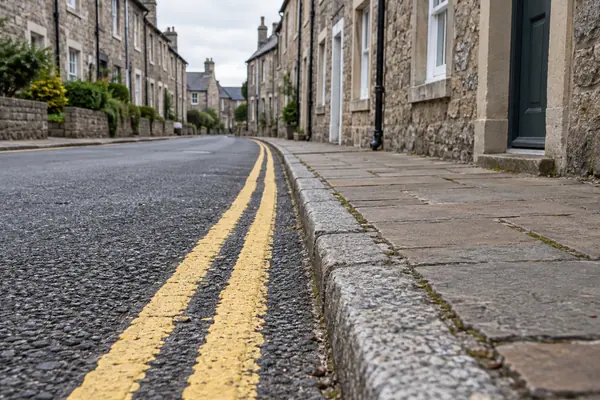
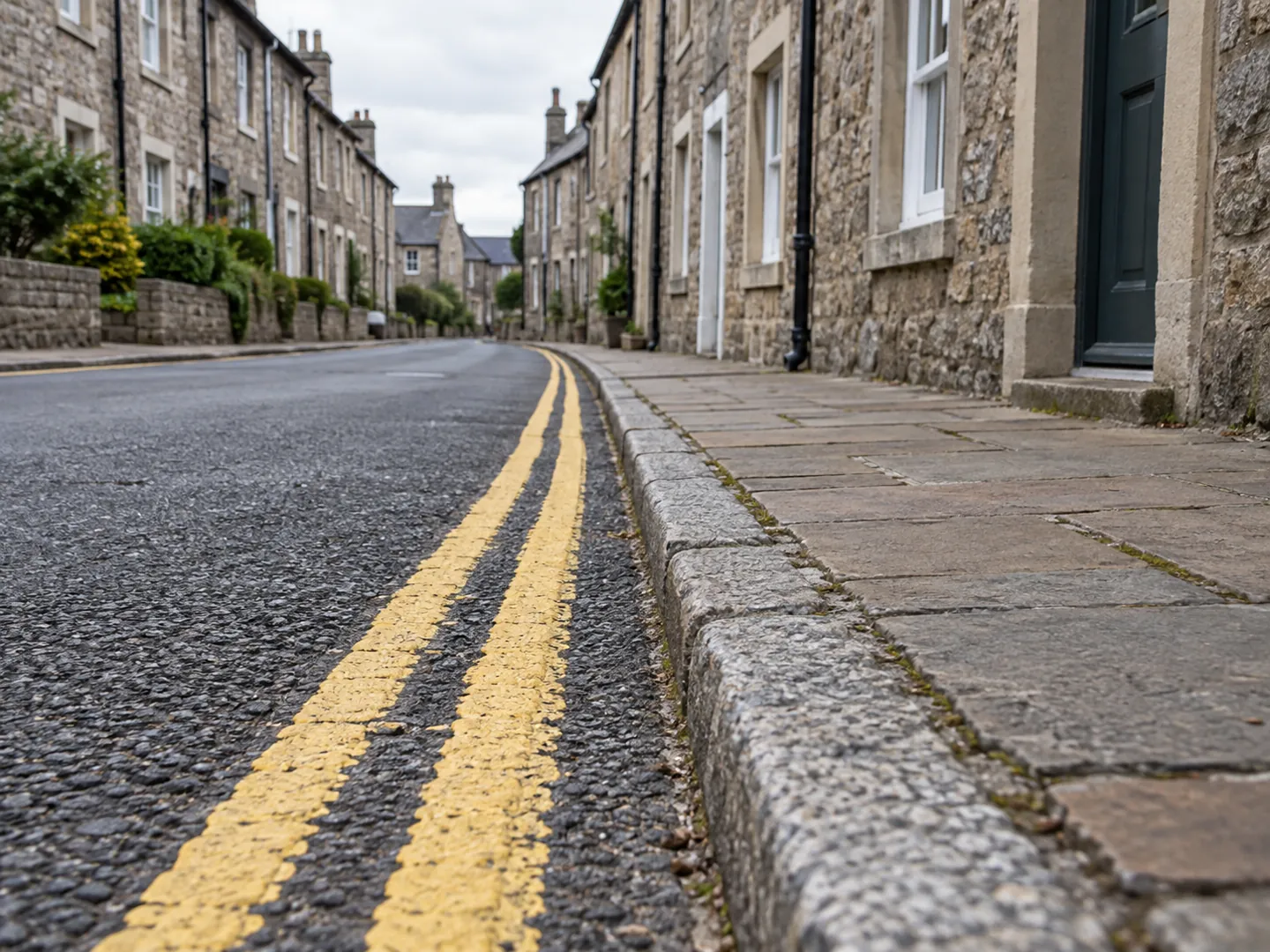
Double yellow lines mean no waiting at any time, even without upright signs, unless signs show seasonal restrictions. Single yellow lines apply at the times on nearby plates.
Before you parkBOX JUNCTIONS
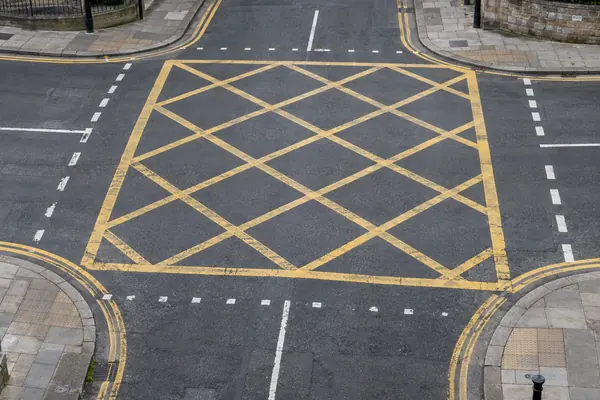
Criss-cross yellow lines mark a box junction. You must not enter the box until your exit road or lane is clear, except when waiting to turn right.
See the numbers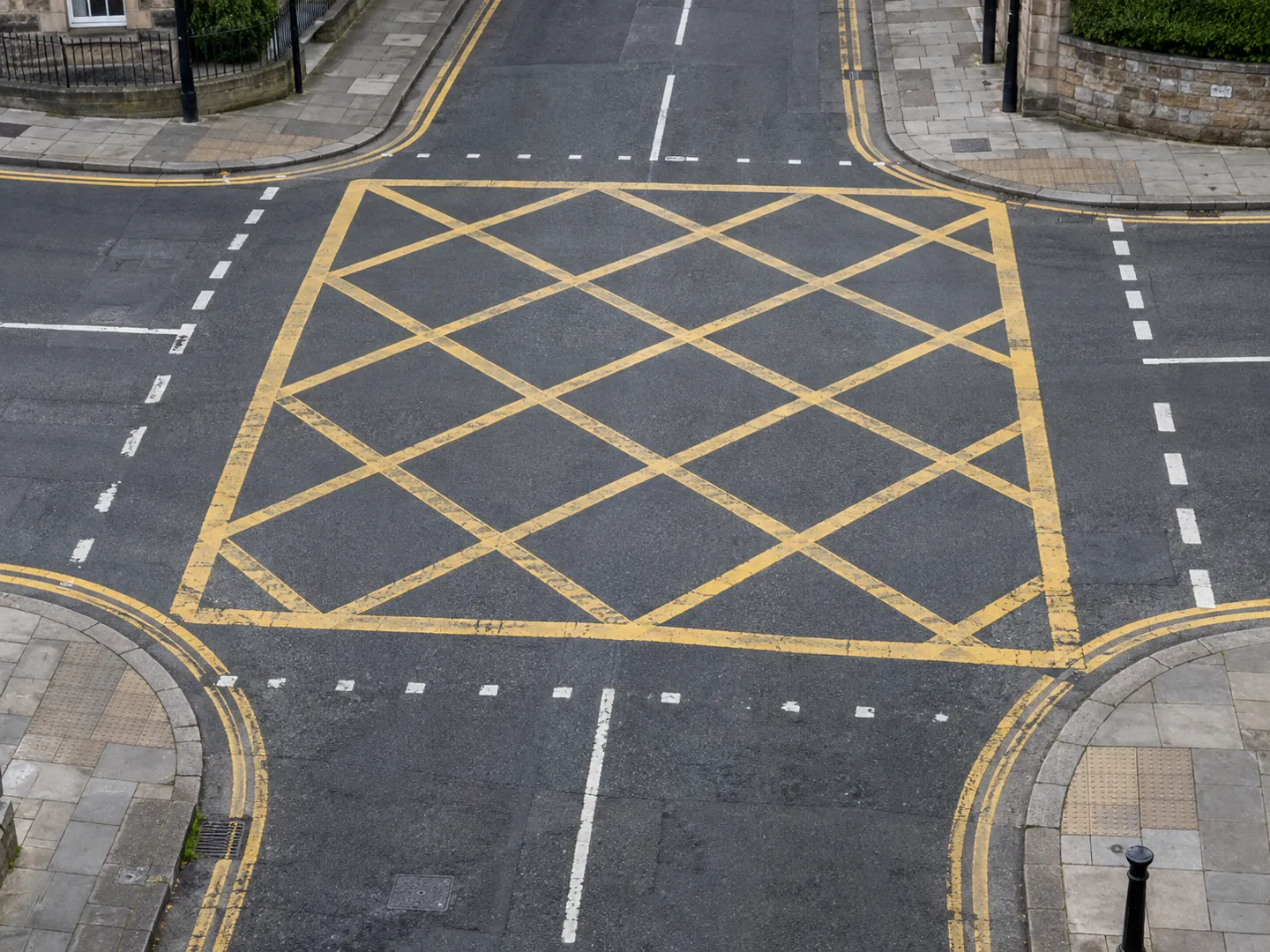
FOUR HABITS AT THE KERB
A kerb line only tells half the story: the Highway Code says signs and time plates nearby must be checked too. These habits follow its advice.
Do not wait or park on double yellow lines, even if there are no upright signs.
Single yellow lines and kerb loading marks only apply at the times shown on nearby black and white plates.
You must not stop or park on a pedestrian crossing, including the area marked by the zigzag lines.
White bay markings and upright signs show where parking is allowed. Use them, or off-street parking, wherever possible.
TWO NUMBERS WORTH KNOWING
One figure from the road-marking manual,
one from the rule on double white lines.
100 mm
Centre line width on a typical two-lane road
The Department for Transport's Traffic Signs Manual gives 100 mm for the centre line on two-lane roads at least 5.5 m wide, and 150 mm on some wider roads.
LINE WIDTH · DfT MANUAL
10 mph
Speed below which you may pass a cycle or horse
With a solid white line on your side, you may cross it if the road is clear to overtake a pedal cycle, horse or road maintenance vehicle travelling at 10 mph (16 km/h) or less.
DOUBLE WHITE LINES · HIGHWAY CODE
The manual also notes that a hazard warning line uses the inverse of the centre line's mark and gap lengths, which is why the marks look longer and the gaps shorter as you approach a hazard.
A QUICK LINE CHECK
Pick a marking to see what it means. The bar shows how strict it is, from guidance you use with judgement to a rule you must not break.
Based on the Highway Code (road markings and rules 127 to 131 and 238) and the Department for Transport's Know Your Traffic Signs. General information, not legal advice.
MARKINGS YOU MAY MISS
White chevrons or diagonal stripes separate lanes or protect turning traffic. If they are bordered by a broken line, enter only if necessary and safe; if bordered by a solid white line, you must not enter except in an emergency.
At night, coloured road studs help: white marks lanes or the centre of the road, red the left-hand edge, amber the edge of the central reservation, and green lay-bys and slip roads, according to the Department for Transport.
Questions
The Highway Code says you may stop while passengers board or alight, and to load or unload, unless there are also loading restrictions shown by kerb marks and plates.
If the line nearer to you is solid, you must not cross or straddle it except in specific cases. If it is broken, you may cross to overtake if it is safe and you can finish before a solid line on your side.
The Department for Transport says stopping is prohibited on any length of road with double white lines, except to pick up or set down passengers, or to load or unload.
Only when your exit road or lane is clear. You may enter and wait when turning right if only oncoming traffic, or other vehicles waiting to turn right, stop you.
They mark Red Routes. Double red lines always mean no stopping at any time; single red lines apply at the times shown on nearby signs.
White chevrons or diagonal stripes separate lanes or protect turning traffic. If the area is bordered by a broken line, enter it only if necessary and safe; if it is bordered by a solid white line, you must not enter except in an emergency.
Updated
ABOUT THIS NAME
doodleline.com is part of the DoodleSale portfolio. It isn't in an auction right now, but you can ask about leasing it.